On March 10, 2005, the NH Sierra Club
and the Alaska Coalition sponsored a program at the Manchester
Institute of Art that concerned protection of the Arctic National
Wildlife Refuge in Alaska. Whether or not the US government will
permit oil drilling in the refuge is currently being debated by
Congress. Over 200 people attended the event in which 4
internationally known environmentalists spoke 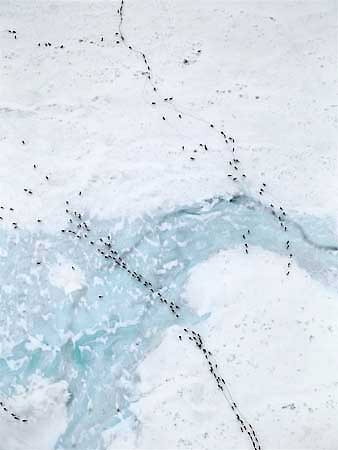 in favor of completely rejecting the drilling.
The Arctic National Wildlife Refuge (ANWR) is a relatively small portion of the Alaskan Wilderness Area that borders on the Arctic Ocean. The Wilderness designation was awarded during the administration of President Carter, but the refuge did not achieve the high degree of protection accorded the Wilderness itself, since oil companies considered that oil supplies might be forthcoming from the area. Since that time there has been great contention as to whether or not drilling should occur. The major reason for opposing the drilling is that the area is the calfing ground of the Porcupine caribou herd, which migrate to the area from the Brooks range to the south. However the area is also home to musk ox, polar bears, grizzly bears, a large number of migratory birds and other wildlife.
The four individuals who spoke at the Institute event were: 1. noted ornithologist, bird illustrator, and author - David Allen Sibley: 2. award-winning author - Peter Matthiesen; 3. writer - Terry Tempest Williams; and 4. arctic photographer, Subhankar Banerjee.
David Sibley is the author of "The Sibley Guide to Birds" - a field guide to North American birds published in 2000, that contains his own drawings. He has written and illustrated articles for numerous publications through the years.
Peter Matthiesen is a naturalist and explorer and writes both non-fiction and fiction. His non-fiction work, "The Snow Leopard" won the National Book Award.
Terry Tempest Williams is a naturalist, writer, and environmental activist.. She is a Utah native and descended from Mormon pioneers. Her best known book is "Refuge: An Unnatural History of Family and Place". It is considered a classic in American nature writing.
Subhanker Banerjee spent two years in the Arctic National Wildlife Refuge, covering 4000 miles and documenting the area by photography, as well as developing close relationship with native Gwich'in Indians tribes. Exhibits of his photographs have been on display at numerous museums and galleries throughout the country and he has published a book - Seasons of Life and Land - that contains outstanding photographs of the refuge. He has given numerous radio and TV interviews, presented lectures nationwide, and his images have appeared in dozens of well-known periodicals. He has allied himself with the numerous organizations and individuals who oppose drilling in the refuge and has received awards from the Sierra Club and other conservation organizations.
The program was videotaped by Sierran Bryan Leggo and has appeared on Bedford, Concord and Manchester,NH Public Access Television.
Credits: The photograph shown above was taken by Subhanker Banerjee. It is titled Caribou Migration. A description of the photo is as follows: "Named after the Porcupine River, the 120,000 strong Porcupine caribou herd migrates throughout the refuge and northwestern Canada. The females come to the coastal plain to give birth in late May and early June. The annual migration of this herd is the reason the refuge is sometimes called America's Serengeti. The Gwich'in Athabascan people of Alaska and Canada have depended on this herd for food, clothing and cultural identity for thousands of years."